
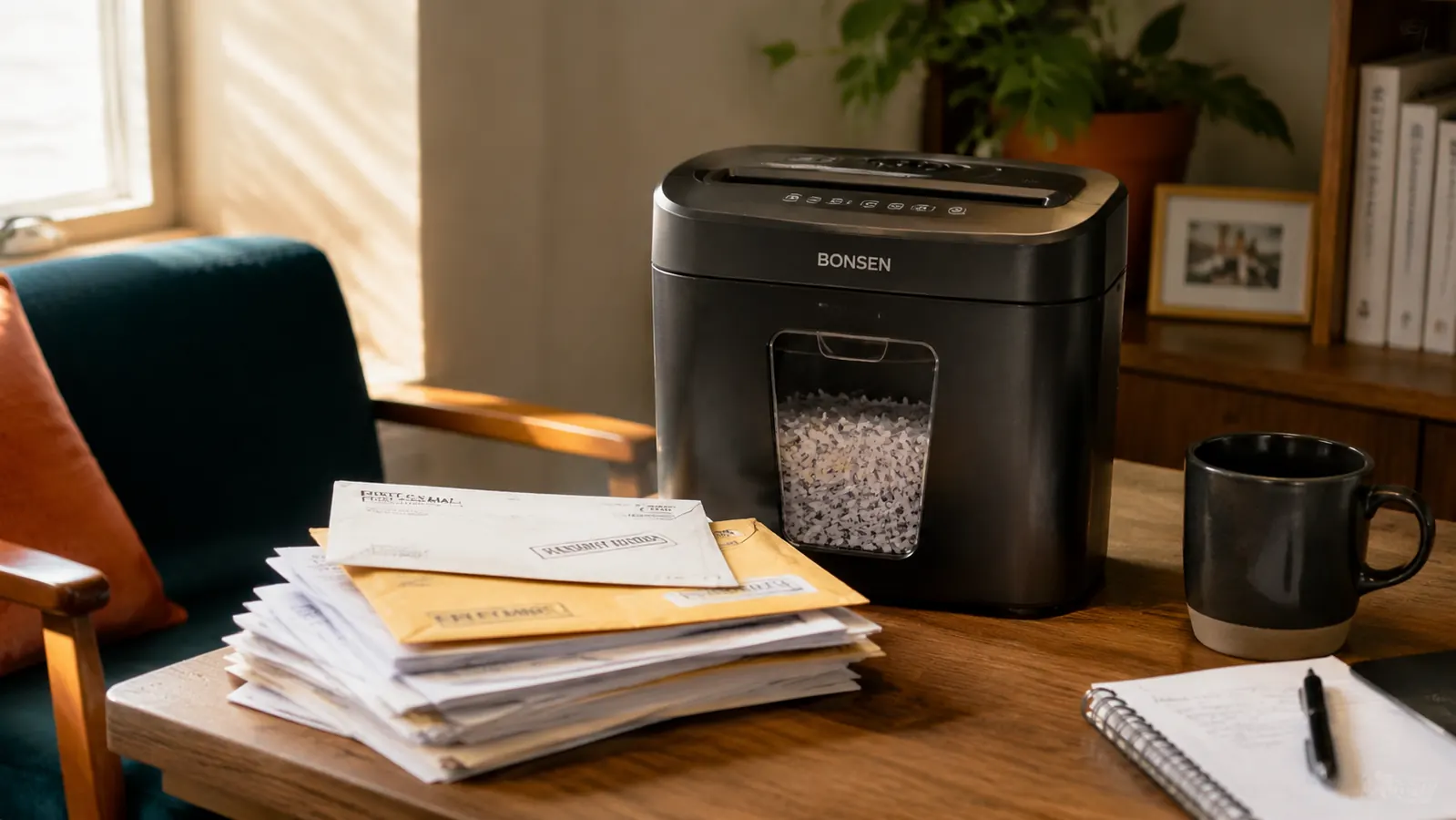
If a small landslide of old bank statements, expired prescriptions, and pre-approved credit card offers has been building up on the corner of your desk because you can't decide which shredder is actually worth buying, you're not alone. I went through that exact debate a few months ago, torn between the Amazon Basics 12-Sheet Cross-Cut Shredder and the Bonsaii cross-cut shredder that keeps popping up in nearly every home office roundup. Both looked capable on paper. Both promised cross-cut security and a few minutes of continuous shredding. So I ran a stack of real paperwork, old tax documents, junk mail, and a few expired cards, through each one to see which actually held up once the novelty wore off.
Here's the short answer before we get into the details. If you want one shredder to handle a typical home office desk, the Amazon Basics 12-Sheet Cross-Cut Shredder is the one I'd point you toward first. It handles a thicker stack per pass, empties less often thanks to a larger bin, and its overheat protection gave me fewer forced breaks mid-task. The Bonsaii shredder isn't a bad machine, and it has a couple of real advantages worth knowing about, but for most people clearing out a backlog of sensitive paperwork, the Amazon Basics model is the steadier day-to-day tool.
I didn't base this on spec sheets alone. Over two weeks, I ran both shredders through the same routine: a folder of expired credit cards, a stack of old bank and utility statements, some stapled school paperwork, and the usual pile of pre-approved mail offers that show up every month. I fed comparable stacks through each machine, timed how long before either one asked for a cooldown, and tracked how many times the bin needed emptying. That side-by-side routine is where the real differences between these two shredders showed up, not in the marketing copy on the box.
| Amazon Basics | Bonsaii Shredder | |
|---|---|---|
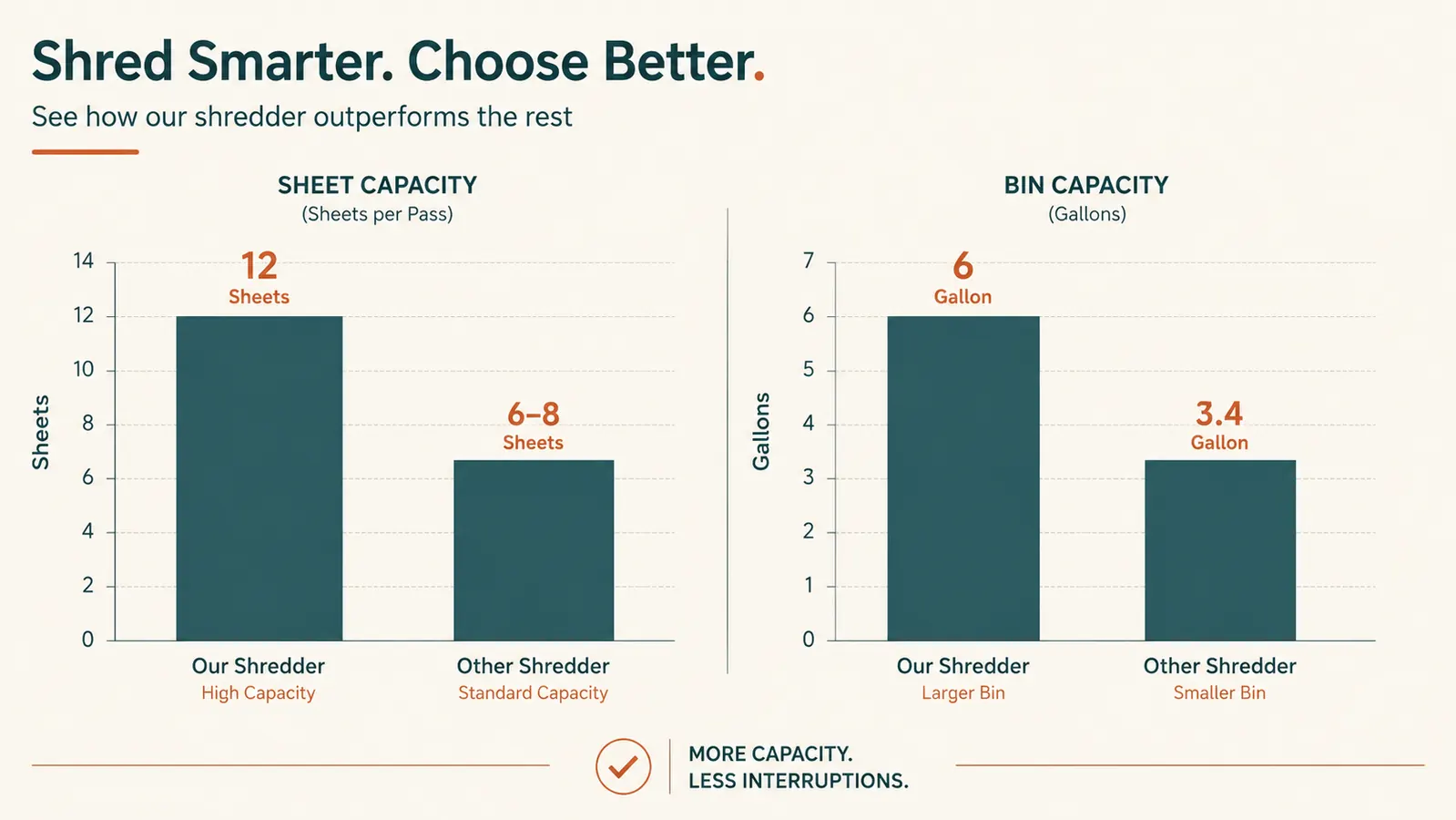
| Sheet Capacity per Pass | Up to 12 sheets at once | Typically 6 to 8 sheets at once |
| Cut Type & Security Level | Cross-cut, comparable to a P-4 security level | Cross-cut, comparable to P-3 to P-4 depending on the model |
| Bin Capacity | Roughly a 6-gallon pull-out bin | Roughly a 3.4-gallon pull-out bin |
| Continuous Run Time | About 5 minutes before a cooldown is recommended | About 2 to 3 minutes on most models |
| Credit Card & CD Shredding | Dedicated slot, handled cards without jamming in testing | Card shredding offered on some models, less consistent in reviews |
| Overheat Protection | Automatic shutoff with a clear cooldown indicator light | Basic thermal cutoff, less obvious warning when it trips |
| Noise Level | Moderate hum, fine for a closed-door office | Similar or slightly louder under a full load |
| Portability & Footprint | Compact tower footprint, fits under most desks | Similarly compact and a little lighter to carry |
| Warranty & Support | Backed by Amazon's standard return policy and limited warranty | Standard manufacturer warranty, support varies by seller |
Where the Amazon Basics Shredder Wins
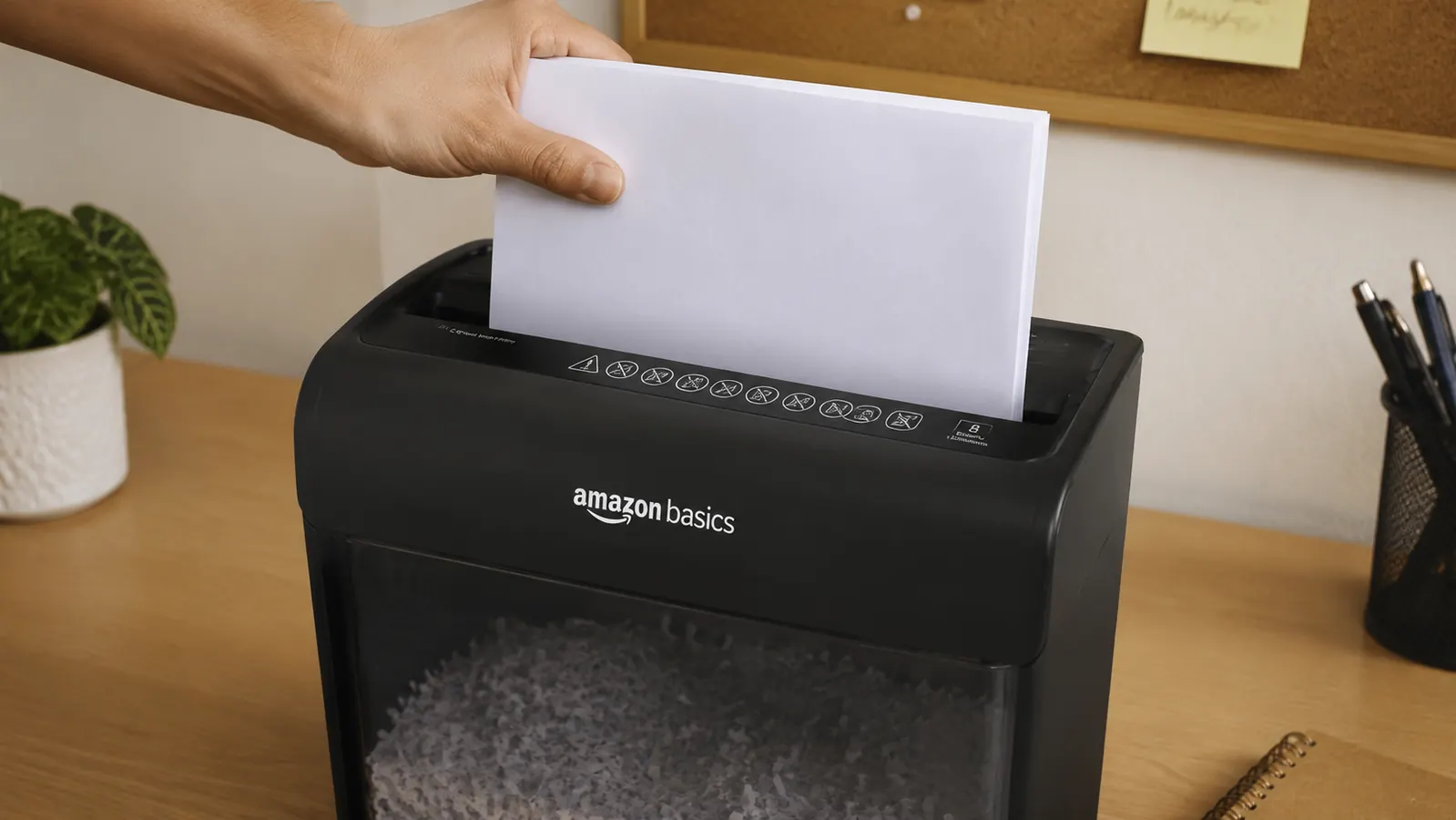
The single biggest difference I noticed was how much less often I had to stop and empty the bin. The Amazon Basics 12-Sheet Cross-Cut Shredder is rated for up to 12 sheets in a single pass, and in practice it chewed through a stack of old utility bills and bank statements without jamming or backing up, something that happened twice with the Bonsaii when I fed it more than six or seven sheets at once. Over a typical week of home office paperwork, that gap in sheet capacity meant fewer trips back to the machine mid-task, which matters when you're trying to clear a backlog in one sitting rather than feeding pages through all afternoon between video calls.
The bin size backed that up. The Amazon Basics model's roughly 6-gallon pull-out bin held close to two weeks of my shredding before it needed emptying, while the smaller Bonsaii bin filled up in under a week with the same volume of paper. The overheat protection was the other place the Amazon Basics shredder pulled ahead. It has a clear indicator light that tells you when the motor needs a short cooldown, so I never had it just stop mid-stack with no explanation. The Bonsaii has thermal protection too, but the warning was less obvious, and mine shut off once without much notice while I was working through a stack of old tax paperwork.
Feed alignment was another small thing that added up over time. The Amazon Basics shredder has a wider feed slot that made it easier to line up a full handful of stapled pages without individually straightening every sheet first. On a rushed morning before a video call, being able to push a loosely stacked folder of old paperwork through in one motion, instead of carefully feeding sheets one at a time, saved real minutes. The Bonsaii's narrower opening meant I had to slow down and feed pages more deliberately or risk a jam, which turned quick cleanup into a slower chore.
Where the Bonsaii Shredder Wins
To be fair to the Bonsaii shredder, it isn't outclassed everywhere. It's noticeably lighter and a little easier to carry if you're the type who shreds mail once a week standing at a counter rather than keeping a shredder parked permanently under a desk. If your home office setup is more of a shared kitchen table situation, and you need to tuck the shredder into a closet between uses, that lighter build is a real point in its favor, and it showed up in how often I actually reached for each machine when space was tight.
Some Bonsaii models also tend to be priced a little lower than the Amazon Basics shredder at any given time, which matters if you're outfitting a home office on a tighter budget and only need something for occasional light shredding, a handful of statements or receipts here and there rather than a weekly backlog. If your shredding needs are genuinely light, that smaller size and lower cost of entry might be enough, and you won't be paying for capacity you're unlikely to use.
There's also something to be said for how unassuming the Bonsaii looks sitting next to a desk. It's a smaller footprint machine that blends into a home office corner without drawing much attention, which matters if your workspace doubles as a guest room or a shared family space and you'd rather it not look like industrial equipment parked in the corner. That's a real consideration for anyone still figuring out where a shredder even fits in a small home office layout, not just what it can do once it's plugged in.
What They Have in Common
Both shredders share the basics you'd expect from a home office cross-cut shredder. Neither is loud enough to be a problem behind a closed door, both handle the occasional staple or paper clip without complaint, and both use cross-cut shredding that turns a bank statement into confetti rather than the long strips of an old strip-cut shredder, which is the security level any home office handling checks, cards, or personal mail should be looking for. If either machine failed at that basic job, this comparison wouldn't be close, so it's worth saying plainly that both are safe, sensible choices for everyday identity protection. The real differences come down to capacity, bin size, and how each machine behaves once you push it past light, occasional use.
Both also come with the same basic safety features you'd want with kids or pets around a home office, a feed slot design that won't run with fingers anywhere near it, and an auto-stop when nothing is actively feeding through. Neither one needs oiling on a strict schedule, though running a shredder oil sheet through either machine every month or so keeps it cutting cleanly instead of tearing paper unevenly as the blades wear. Both are also quiet enough that they won't interrupt a call if you need to run a quick pass between meetings.
Setup and First Impressions
Both shredders arrived mostly assembled, which is about all you want from a machine like this. The Amazon Basics shredder took a couple of minutes to unbox, plug in, and run an empty test pass to clear out any packing dust, and then it was ready to go. The Bonsaii was just as quick to get going, no tools required for either one, and both included a basic instruction sheet covering sheet limits and safety shutoffs.
Where they started to feel different was a few days in, once the novelty wore off and the machines became just another part of the desk routine. The Amazon Basics shredder's pull-out bin has a small viewing window that made it obvious when it was getting full, so I never opened it to an overflowing surprise. The Bonsaii's bin was harder to check at a glance, and a couple of times I only realized it was full when the shredder started jamming on the last few sheets of a stack.
The shredder that wins is the one you'll actually keep running, not the one with the longer spec sheet.
Ready to Stop Stacking Sensitive Mail on Your Desk?
The Amazon Basics 12-Sheet Cross-Cut Shredder handled everything I fed it, from bank statements to old cards, without the jams or overheating I ran into with the smaller Bonsaii. Check today's price on Amazon and see if it fits your home office.
Amazon Check Today's Price on Amazon →Who Should Buy Which
If your home office deals with a steady stream of paperwork, tax documents once a year, monthly statements, old receipts, expired cards, the Amazon Basics 12-Sheet Cross-Cut Shredder is the more practical daily tool. The larger sheet capacity and bigger bin mean you can sit down, clear an entire folder of old documents in one pass, and not think about the shredder again for a couple of weeks. That kind of set-it-and-forget-it reliability is what most home offices actually need, especially if paperwork tends to pile up between busy weeks rather than getting handled the day it arrives. It's also the better pick if more than one person in the household uses the shredder, since a bigger bin and higher sheet capacity hold up better under mixed, unpredictable use.
If you shred rarely, a few pieces of mail a week, and portability or a lower cost of entry matters more to you than raw capacity, the Bonsaii is a reasonable choice and not one I'd talk you out of. Just go in knowing you'll be feeding fewer sheets at a time and emptying the bin more often. For most home offices juggling actual paperwork, tax season, old lease agreements, years of statements, though, the Amazon Basics shredder is the one that will feel less like a chore to use, week after week. And if you're mostly shredding junk mail rather than dense stacks of statements, the lighter machine won't feel like a downgrade in everyday use.
Clear the Backlog Once, Not Every Weekend
See today's price on the Amazon Basics 12-Sheet Cross-Cut Shredder and get your home office paperwork handled for good.
Amazon Check Today's Price on Amazon →