

Identity theft almost never starts with a hacker in a hoodie. It starts with your recycling bin. A pre-approved credit card offer, a bank statement, a shipping label with your full name and address, all sitting in a paper bag by the curb where anyone willing to dig for five minutes can read them. I did not take this seriously until a woman two streets over had her mailbox emptied one Tuesday afternoon and someone opened a store credit card in her name before the week was out. That was the week I bought the Amazon Basics 12-Sheet Cross-Cut Paper and Credit Card Shredder and set it up right where my mail actually lands, on the little table by my desk, not tucked away in a closet where it would never get used.
Here is what I want to walk you through. This is not a scare tactic, it is a five-step system you can set up in one afternoon and keep running with almost no effort after that. We will cover which documents actually put you at risk, how to pick a shredder that can keep up with a real home office, where to put it so you use it, how to build a habit around it instead of a quarterly panic-shred, and what to do with the tricky items that do not fit through a normal feed slot. None of this requires a home security budget or a locksmith. It just requires a machine that sits somewhere convenient and a routine small enough that you will actually keep it.
The Documents Piling Up in Your Mail Basket Are Worth More to a Thief Than Your Wallet
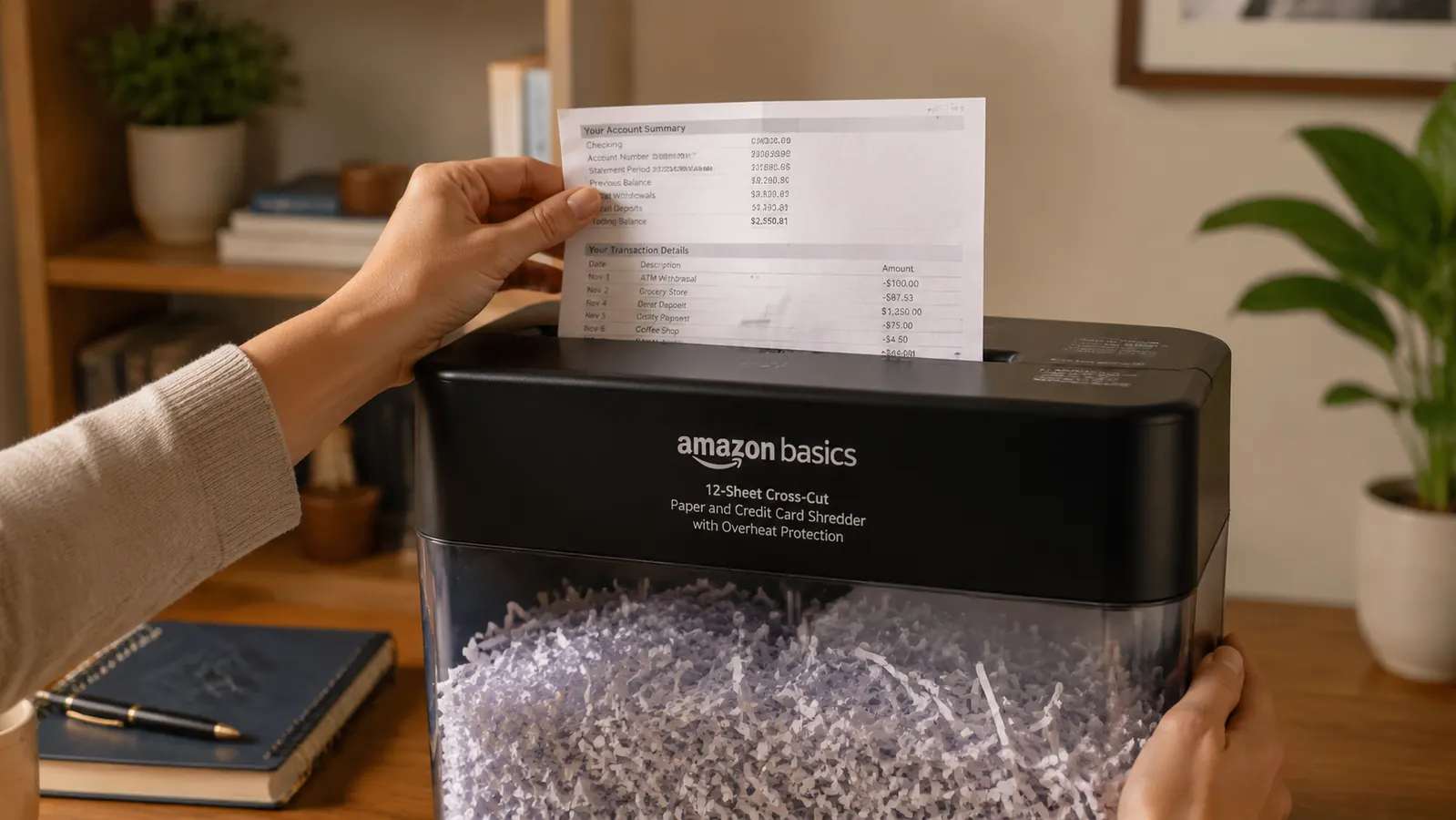
A stolen credit card gets canceled in a phone call. A stolen Social Security number, account number, or date of birth can be used for months before you notice. The Amazon Basics 12-Sheet Cross-Cut Shredder turns every one of those documents into confetti in about ten seconds, right at your desk, with overheat protection so it can handle a real backlog without quitting on you halfway through.
Amazon Check Today's Price on Amazon →Step 1: Know Which Papers Are Actually a Risk
Not everything that comes through your mail slot needs to be shredded. Trying to shred every single piece of paper is how people give up on the whole system by week two. The goal is to sort quickly, not to treat every flyer like a state secret.
The high-risk pile is smaller than you think, but it matters. Bank and credit card statements, anything with a full account number on it, tax documents and old W-2s, pay stubs, medical bills and explanation-of-benefits forms, canceled checks, pre-approved credit offers, expired IDs and old insurance cards, and shipping labels that show your name, address, and phone number together. Every one of those is a small piece of the puzzle a thief needs to open an account or file a fraudulent tax return in your name.
The safe-to-recycle pile is bigger. Plain advertising flyers with no account or personal information, catalogs, most magazines, and junk mail addressed to "Current Resident" can go straight into paper recycling. Knowing the difference is what makes this sustainable, because you are not standing at the shredder for twenty minutes every time the mail arrives.
A good rule of thumb when you are new to sorting: if the document has your full name paired with any number, account, policy, routing, or ID, treat it as high risk. If it only has your name and address with no numbers attached, it can usually go to recycling. That one filter alone will handle about 90 percent of your daily mail without you having to stop and think twice.
Step 2: Choose a Shredder Built for Daily Home Office Use
This is the step people skip, and it is the one that determines whether any of this actually happens. A cheap strip-cut shredder from a decade ago cuts paper into long ribbons that can be reassembled with a little patience. A cross-cut shredder cuts both directions, turning a bank statement into confetti that is genuinely useless to anyone who finds it. For anything with an account number on it, cross-cut is the baseline, not the upgrade.
I chose the Amazon Basics 12-Sheet Cross-Cut Paper and Credit Card Shredder because it is rated for the volume a real home office actually produces, up to 12 sheets at a time, and it has a credit card slot built in, which matters more than people expect. Expired debit cards, old gift cards, and store loyalty cards all carry a magnetic strip or a partial account number, and this shredder handles them the same way it handles paper, no separate tool needed.
It also has overheat protection, which sounds like a small feature until you are catching up on six months of untouched tax paperwork in one sitting. Run a shredder too long without a break and a cheaper motor will just stop working. This one is built to handle a real backlog, cool down when it needs to, and keep going, which is exactly the kind of session most people actually do the first time they set this up.
Skip the Strip-Cut Trap. Cross-Cut Is the Only Version Worth Buying for Financial Documents
If a shredder cannot handle a folded bank statement, a stapled tax form, and an old credit card without jamming, it will end up in a closet within a month. The Amazon Basics shredder is rated for daily home office paperwork and comes with a pull-out bin so you can see when it is time to empty it, no guessing.
Amazon See Current Availability on Amazon →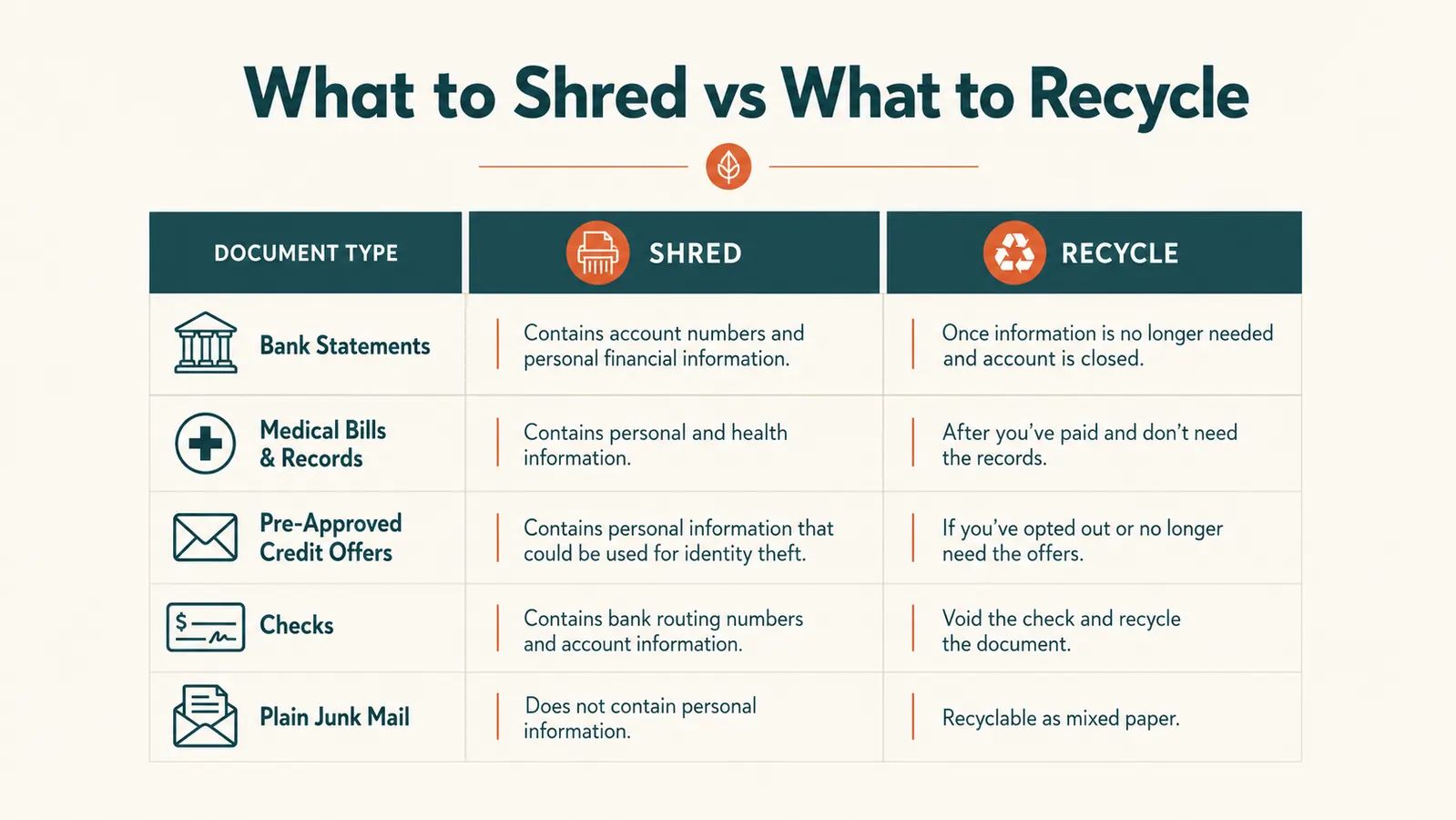
Step 3: Set Up a Shred Station Where Your Mail Actually Lands
The single biggest reason shredders end up unused is placement. If yours lives in a closet, in the garage, or on a shelf you have to reach for, you will set the mail down "just for now" and that pile will grow for three months. Put the shredder wherever your mail naturally lands first, on the console table by the door, on the corner of your home office desk, next to the spot where you already open bills.
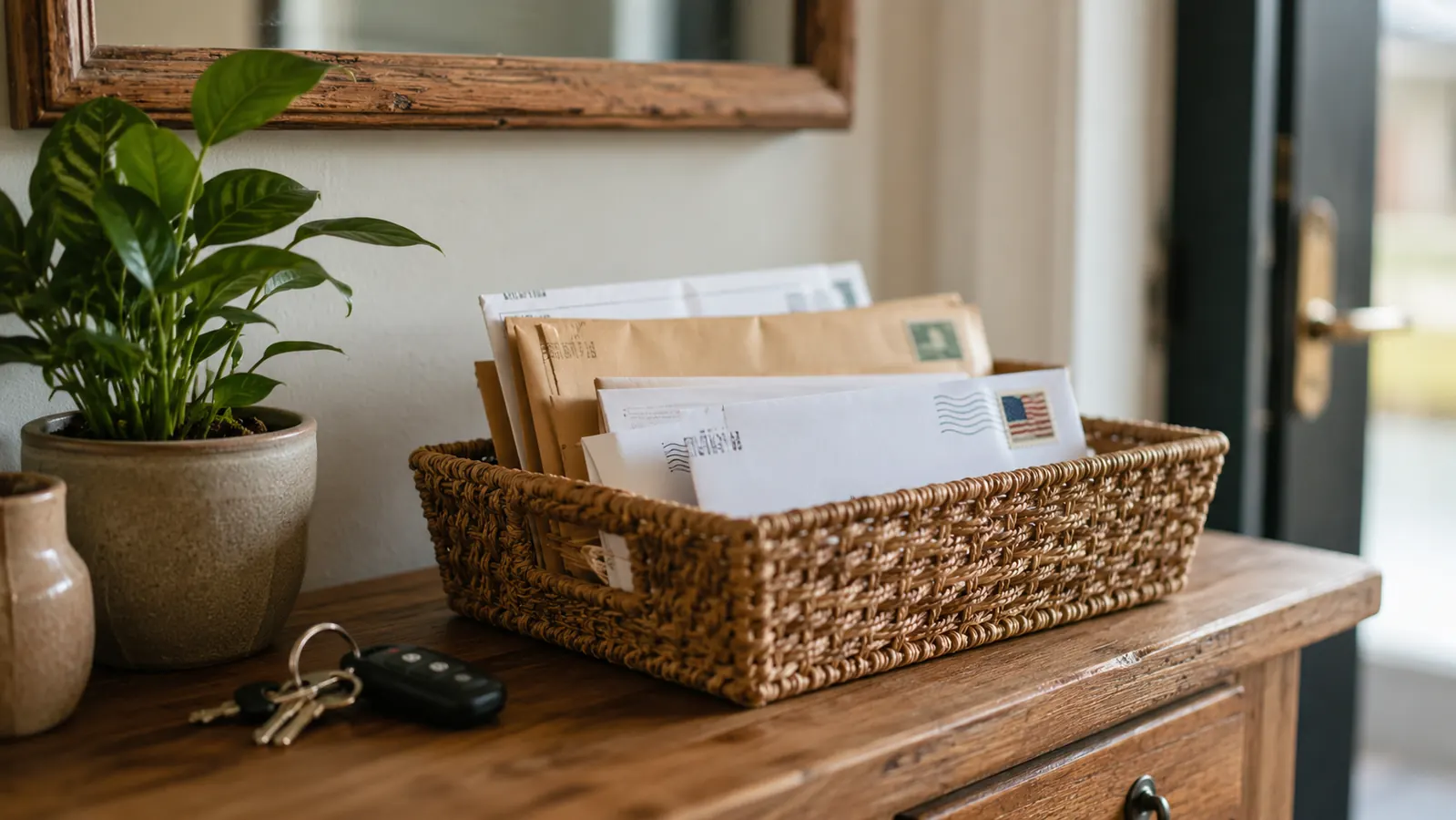
I keep mine on a low shelf right beside the small basket where incoming mail sits until I go through it, so the sorting and the shredding happen in the same five-foot radius. There is no walking a stack of paper to another room, which is the step that quietly kills most people's good intentions.
If your home office does not have room for a shredder to sit out permanently, a nearby closet shelf still beats a garage or basement. The rule is simple: closer than you think you need it to be. And if you share the space with family, keep the shredder somewhere it stays plugged in and ready, because the extra step of finding an outlet is often the difference between shredding today and shredding never.
Step 4: Build a Two-Minute Daily Habit Instead of a Quarterly Purge
The system works because it is small and repeatable, not because it is thorough. When mail comes in, sort it into two piles in about thirty seconds using the risk list from Step 1. Recycling goes straight to recycling. Anything with an account number, a Social Security number, or personal identifiers goes into a small tray next to the shredder.
Once a day, or every couple of days if your mail volume is light, feed that tray through the shredder while you are already standing at your desk, maybe while a call is on hold or coffee is brewing. It takes less time than scrolling your phone for the same two minutes. The goal is to never let that tray get more than a few days deep, because a stack that grows unshredded on the counter for three months is exactly the pile a house guest, a subcontractor, or a break-in target would find.
For documents you are not sure about, tax records you might need for an audit, old pay stubs, anything you are hesitant to destroy, keep a separate labeled folder and review it once a season. The point of a daily habit is speed on the obvious stuff, not perfect judgment on every borderline document in the moment.
Once this becomes routine, it stops feeling like a chore and starts feeling like part of opening the mail, the same way you already sort bills from catalogs without thinking about it. Most people who stick with this tell me the habit took about two weeks to feel automatic, and after that they genuinely never think about it again.
Step 5: Handle the Tricky Items That Do Not Fit the Normal Routine
A few things need a slightly different approach than the standard letter-size document. Expired credit and debit cards go straight through the credit card slot on the shredder, no separate scissors needed. Old CDs and DVDs with sensitive backups on them are not something most home shredders are built to handle, and forcing them through can damage the blades, so those get physically snapped or set aside for a dedicated media-destruction service if you have a real stack of them.
Staples and small paperclips are generally fine to run through a 12-sheet cross-cut shredder in small numbers, but binder clips and thick cardstock should be removed first. And junk mail that looks harmless but has a barcode or a partial account number printed on the back, common with some credit offers and insurance mailers, should get the same treatment as a bank statement. When in doubt, shred it. The two extra seconds cost you nothing.
What Else Helps
A shredder solves the paper side of identity theft, but it works best alongside a few other habits. Put a lock on your mailbox if you live somewhere mail sits unattended for hours, since a locked box removes the easiest opportunity a thief has. Sign up for your postal service's free informed delivery notifications so you know what should be arriving and can notice quickly if something goes missing.
Opt out of pre-approved credit offers through the official opt-out registry, which cuts down the volume of exactly the kind of document that causes the most damage if it falls into the wrong hands. And if you travel for work or pleasure, put a hold on your mail rather than letting it stack up in a visible box. None of these take more than a few minutes to set up once, and together with a shredder sitting where you actually use it, they close most of the gaps that a determined thief looks for.
The best security system in the world does not help if the mail sits in a paper bag on the counter for three months, waiting for someday.
You Already Have the Mail. You Just Need Somewhere for It to Go
The Amazon Basics 12-Sheet Cross-Cut Paper and Credit Card Shredder handles bank statements, tax paperwork, and old credit cards in one machine, with overheat protection built for a real backlog and a pull-out bin so you always know when to empty it. Set it up once this week and the daily habit takes care of itself.
Amazon Check Today's Price on Amazon →